

Common Places Asbestos Is Found in Commercial Properties
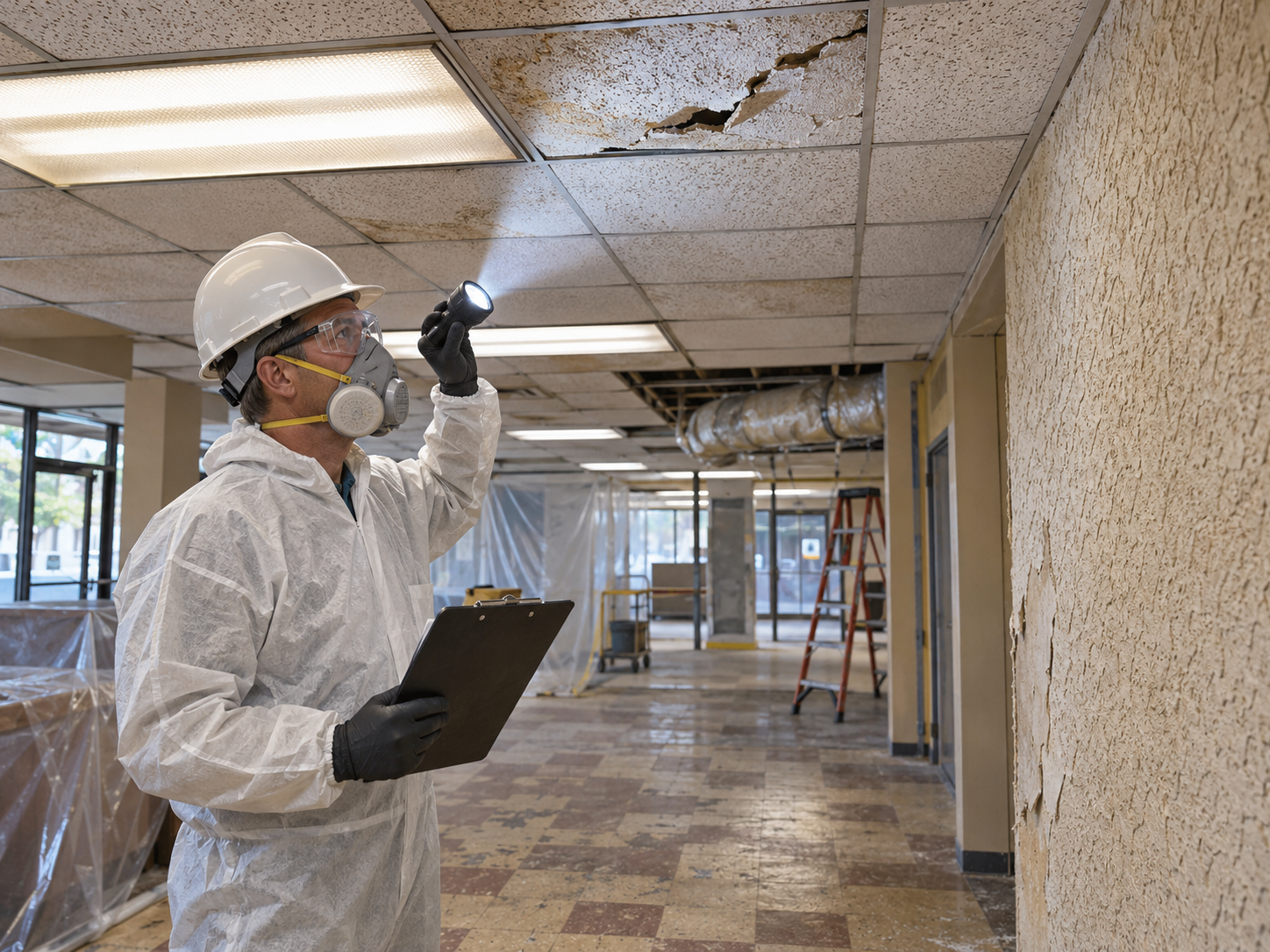
When you own or manage a commercial building, you probably know where the electrical panels are located, which areas need regular maintenance, and what improvements are planned for the coming year. However, there’s one thing you might not know about your property: whether certain building materials contain asbestos. For commercial property owners in Concord, NC, this question becomes especially important when maintaining older buildings, preparing for renovations, or purchasing a property with an extensive construction history.
Asbestos was once incorporated into numerous building products because of its heat resistance, strength, and insulating properties. Although many of those products are no longer manufactured with asbestos, materials installed decades ago may still remain in commercial buildings. Some are visible, while others are concealed beneath flooring, above ceilings, or around mechanical systems.
Where is asbestos most commonly found in commercial properties? Potential locations include:
- Ceiling tiles and acoustic materials: Certain older ceiling panels, textured finishes, and sprayed coatings may contain asbestos.
- Pipe wrapping and insulation: Asbestos was historically used around boilers, steam pipes, and mechanical equipment.
- Flooring and adhesives: Older vinyl tiles, sheet flooring, backing materials, and certain adhesives can contain asbestos.
- Fireproofing materials: Some commercial buildings have asbestos-containing coatings on structural steel and other surfaces.
- Roofing and exterior materials: Certain shingles, cement panels, and roofing products were historically manufactured with asbestos.
At Concord Asbestos Abatement and Mitigation LLP, we bring more than 35 years of experience to asbestos inspection, testing, removal, and remediation projects. As a family-owned, locally operated company certified in North Carolina and South Carolina, we help commercial property owners throughout Concord, Cabarrus County, and the greater Charlotte area address potentially hazardous building materials with professional care.
Where Can Asbestos Be Found in Commercial Ceilings and Walls?
Asbestos may be present in older commercial ceiling tiles, sprayed acoustic finishes, textured coatings, wall compounds, and fireproofing materials. These products were historically used for sound control, insulation, fire resistance, and surface finishing, making ceilings and walls important areas to evaluate before renovation.
Suspended Ceiling Tiles
Suspended ceilings are common in offices, retail spaces, medical buildings, and other commercial properties.
Some older ceiling panels were manufactured using asbestos-containing materials, although many similar-looking products contain no asbestos.
This distinction is important because appearance alone cannot establish whether a ceiling tile contains asbestos.
If you’re planning to replace ceiling panels, modify overhead lighting, or access equipment above a suspended ceiling, professional inspection may be necessary before work begins.
Textured Ceilings and Acoustic Coatings
Older commercial buildings sometimes feature sprayed or troweled acoustic coatings.
These materials were used to reduce noise, provide decorative finishes, or contribute to fire protection.
Certain historic formulations contained asbestos, particularly products installed during periods when asbestos-containing building materials were widely used.
Damaged or deteriorating coatings deserve professional attention, especially when construction activities could disturb them.
However, even an intact coating may require testing before renovation if the planned work involves cutting, drilling, scraping, or removal.
Wallboard, Joint Compounds, and Plaster
Asbestos wasn’t limited to ceiling materials.
Some older wall systems incorporated asbestos-containing joint compounds, textured finishes, plaster products, or specialty wallboard materials.
For example, a commercial tenant improvement project might involve removing partitions to create a larger office.
Before demolition, the project team should determine whether materials within the affected walls require asbestos evaluation.
For older buildings near downtown Concord or throughout Kannapolis, renovation history can make this especially important.
Several generations of construction materials may be present within the same space.
Why Was Asbestos Used in Pipe Wrapping and Mechanical Insulation?
Asbestos was widely used in pipe wrapping and mechanical insulation because it could tolerate high temperatures and help reduce heat transfer. Older commercial and industrial buildings may still contain these materials around steam lines, boilers, heating equipment, and other mechanical systems.
Insulation Around Steam Pipes and Hot Water Lines
Commercial buildings with older heating systems may contain insulation wrapped around steam or hot water piping.
Historically, some of these products incorporated asbestos because of its insulating properties and resistance to heat.
Potential locations include mechanical rooms, basements, service corridors, and spaces above suspended ceilings.
If insulation appears deteriorated, damaged, or partially detached, it should not be disturbed by untrained personnel.
A qualified inspector can determine whether sampling and laboratory analysis are appropriate.
Boiler and Furnace Insulation
Older boilers and industrial heating systems sometimes used asbestos-containing insulation around equipment surfaces, connections, and associated piping.
These materials may remain in buildings that have undergone partial mechanical upgrades.
For example, a facility might have replaced its primary boiler while leaving portions of older insulated piping in place.
This is one reason commercial asbestos inspections should consider the property’s renovation history rather than focusing exclusively on equipment that is currently operating.
HVAC Ducts and Mechanical Components
Certain older HVAC systems included asbestos-containing duct insulation, flexible connectors, tapes, or other specialty materials.
However, not every fabric connector or insulated duct contains asbestos.
Testing is necessary when material composition is uncertain.
For property managers planning HVAC upgrades in Concord, Harrisburg, or the Charlotte metro, coordinating asbestos evaluation before equipment removal can help prevent unexpected project delays.
Can Commercial Flooring and Adhesives Contain Asbestos?
Yes, certain older commercial flooring materials and adhesives can contain asbestos, including vinyl floor tiles, sheet flooring, backing materials, and some installation mastics. These products are particularly important to evaluate before flooring removal because asbestos-containing layers may be hidden beneath newer surfaces.
Older Vinyl Floor Tiles
Vinyl flooring has been widely used in commercial buildings because it’s practical and relatively easy to maintain.
However, some older tile products were manufactured with asbestos fibers.
These materials may still exist in offices, retail stores, warehouses, and other properties throughout Cabarrus County.
The age or size of a tile may provide historical context, but neither is a reliable test for asbestos.
Only appropriate laboratory analysis can confirm whether the material contains asbestos.
Flooring Adhesives and Mastics
Even when the flooring itself doesn’t contain asbestos, the adhesive underneath may.
Certain older mastics were formulated with asbestos-containing materials.
This creates an important consideration during renovation because removing the visible flooring may expose an older adhesive layer.
Grinding, sanding, or mechanically disturbing suspect flooring materials can create hazards and should not proceed without appropriate professional evaluation.
Flooring Hidden Beneath Newer Materials
Commercial properties often receive new flooring when tenants change or spaces are renovated.
However, older materials aren’t always removed during these projects.
An office may have newer vinyl plank flooring installed over earlier tile, or carpeting may conceal older resilient flooring.
For real estate investors and facility managers evaluating older Concord properties, these concealed layers can affect remodeling plans.
A professional survey can help identify relevant materials before removal activities begin.
What Other Commercial Building Materials May Contain Asbestos?
Beyond ceilings, pipe insulation, and flooring, asbestos may be found in older roofing products, exterior siding, fireproofing coatings, mechanical gaskets, and specialty building materials. The Environmental Protection Agency identifies numerous historical uses, making a comprehensive inspection important when planning work on older properties.
Spray-Applied Fireproofing
Some commercial and industrial buildings contain spray-applied fireproofing on structural beams, columns, and other building components.
Older fireproofing products sometimes used asbestos to improve heat resistance.
Because these coatings can cover extensive structural areas, they may become a significant consideration during renovations.
Projects involving structural alterations or demolition should evaluate these materials before work begins.
Roofing and Exterior Siding
Asbestos was historically used in certain roofing shingles, roofing felts, cement siding, and related products.
These materials may remain on older commercial buildings even after interior spaces have been modernized.
Before replacing a roof or removing exterior panels, building owners should determine whether the affected materials have been evaluated.
Weathering alone does not establish that asbestos is present, but it can affect the condition of materials that contain it.
Industrial Gaskets and Specialty Components
Certain industrial equipment historically used asbestos-containing gaskets, packing materials, and heat-resistant components.
These products may be encountered during machinery maintenance, equipment replacement, or industrial demolition.
Manufacturing facilities near Concord’s commercial and industrial corridors may have additional considerations involving equipment-specific materials.
The appropriate assessment should account for both the building and any equipment affected by the planned work.
Fire Doors and Other Specialty Materials
Some older fire doors, panels, electrical components, and specialty construction products incorporated asbestos-containing materials.
These components may not be obvious during an ordinary property walkthrough.
That’s another reason a qualified asbestos inspector considers the building’s age, construction details, and planned activities rather than checking only a short list of visible surfaces.
Why Does Identifying Asbestos Before Renovation Matter?
Identifying asbestos before commercial renovation helps property owners understand potential hazards, determine applicable work requirements, and coordinate construction activities more effectively. For Concord businesses, early testing can reduce the likelihood of unexpected delays while supporting a safer environment for employees, tenants, and contractors.
Asbestos Cannot Be Identified Reliably by Sight
One of the most important things to understand is that asbestos-containing materials frequently resemble products that contain no asbestos.
A ceiling tile may look ordinary, and pipe insulation may appear similar to modern products.
Visible deterioration can indicate that a material needs attention, but it does not prove asbestos is present.
Likewise, a material that appears intact may still contain asbestos.
Do not scrape, cut, drill, collect samples, or attempt to remove suspected materials yourself. An appropriately accredited asbestos professional should perform the necessary evaluation.
Building Age Is a Clue, Not a Diagnosis
Commercial buildings constructed or renovated before the mid-1980s may deserve particular attention because asbestos-containing building products were more commonly used in earlier decades.
However, there is no universal construction date that guarantees a building is asbestos-free.
Later renovations may have introduced new materials while leaving original products in place.
For properties throughout Concord, Kannapolis, and the greater Charlotte market, professional assessment provides more useful information than assuming the building’s age tells the entire story.
North Carolina Has Specific Inspection Requirements
The North Carolina Department of Health and Human Services states that buildings must be inspected by a North Carolina-accredited asbestos inspector before covered demolition or renovation activities.
The inspection determines whether asbestos-containing materials are present and identifies their type, location, and quantity.
Depending on the project, additional notification, permitting, and removal requirements may apply.
Building owners should discuss applicable requirements early in the planning process rather than waiting until demolition crews are ready to begin.
Not Every Asbestos-Containing Material Requires Immediate Removal
Finding asbestos in a building doesn’t automatically mean every affected material must be removed.
In some circumstances, intact materials can be managed in place when they won’t be disturbed and an appropriate management approach is followed.
However, renovation activities that disturb regulated materials may require removal or other prescribed controls.
A professional evaluation helps determine which response is appropriate for the material and planned work.
How Does a Professional Commercial Asbestos Assessment Work?
A professional asbestos assessment typically involves reviewing the building, identifying suspect materials, collecting samples when appropriate, obtaining laboratory results, and recommending a response based on the findings. For commercial properties in Concord, this process can support renovation planning while helping owners understand the scope of any necessary abatement work.
Inspection and Material Identification
Our process begins with understanding the property and the concerns that prompted the inspection.
Whether you’re renovating an office suite or evaluating an industrial facility, identifying the relevant building areas helps establish an appropriate assessment scope.
Qualified inspectors examine suspect materials and document conditions that may affect further testing or management.
Sampling and Laboratory Analysis
When sampling is required, an accredited professional collects material samples using appropriate procedures.
The samples are analyzed through qualified laboratory resources, including state-approved testing arrangements where applicable.
Laboratory results help establish whether the materials contain asbestos and guide decisions about the next steps.
Clear Findings and Practical Recommendations
Inspection findings should explain what was evaluated, where asbestos-containing materials were identified, and which areas may require additional attention.
At Concord Asbestos Abatement and Mitigation LLP, we focus on providing clear information so property owners can understand the recommended work.
For occupied offices and multi-tenant buildings, that information is especially valuable when coordinating schedules and communicating with contractors.
Safe Abatement and Follow-Up
When removal is necessary, accredited professionals use appropriate containment, protective equipment, work practices, and waste-handling procedures.
The work plan depends on the materials involved, accessibility, project size, and applicable regulatory requirements.
Our team provides asbestos removal and remediation services for commercial and industrial properties, with attention to minimizing unnecessary disruption.
Required follow-up procedures may include inspections or clearance activities, depending on the project and governing standards.
Transparent Planning for Commercial Projects
Asbestos abatement costs vary based on material type, quantity, accessibility, containment requirements, and the complexity of the work.
A small retail renovation may involve a different scope than a large industrial or multi-building project.
We provide upfront pricing and discuss the proposed services so customers can make informed decisions about their properties.
With more than 35 years of experience and certification in North Carolina and South Carolina, we’re equipped to assist with commercial projects of varying sizes throughout the region.
Frequently Asked Questions About Asbestos in Commercial Properties
Where is asbestos most commonly found in older commercial buildings?
Asbestos may be present in older ceiling tiles, acoustic coatings, pipe insulation, boiler wrapping, flooring, adhesives, fireproofing materials, roofing products, and certain wall components. The exact locations depend on the building’s construction and renovation history, making professional inspection important.
Can commercial ceiling tiles contain asbestos?
Yes, some older ceiling tiles and acoustic materials were manufactured with asbestos. However, many similar-looking products contain no asbestos, so visual appearance cannot establish whether testing or removal is necessary.
Does old pipe wrapping always contain asbestos?
No, older pipe insulation may contain asbestos, but not every insulation product was manufactured with it. Because damaged insulation can create concerns if asbestos is present, qualified professionals should evaluate suspect material before maintenance or removal.
Can asbestos be hidden underneath commercial flooring?
Yes, older vinyl flooring, backing materials, and certain adhesives may remain beneath newer carpet, tile, or other floor finishes. Before removing existing flooring during a renovation, property owners should determine whether the affected layers require asbestos inspection.
Is asbestos dangerous if it’s left undisturbed?
Asbestos-containing materials generally present greater concerns when fibers can become airborne through damage or disturbance. Some intact materials may be managed in place under appropriate professional guidance, but their condition and any planned construction activities should be evaluated.
Do I need an asbestos inspection before renovating a commercial building in Concord, NC?
North Carolina generally requires an accredited asbestos inspection before covered commercial renovation or demolition activities. Other notification, permit, and abatement requirements may also apply depending on the project, so property owners should confirm the requirements before work begins.
How are commercial building materials tested for asbestos?
An appropriately accredited professional identifies suspect materials and collects samples using suitable procedures when necessary. Those samples are analyzed by a qualified laboratory, and the results help determine whether asbestos management or removal is appropriate.
Can Concord Asbestos Abatement and Mitigation LLP handle large commercial projects?
Yes, we work with commercial properties of different sizes, including office spaces, industrial facilities, and multi-tenant buildings. Our services include professional asbestos inspection, testing coordination, removal, and remediation throughout Concord and surrounding North Carolina communities.
Protect Your Concord Property by Knowing What May Be Behind the Walls
Older commercial buildings can have plenty of character, practical value, and opportunities for improvement, but they may also contain construction materials that require careful attention. Asbestos-containing products can be found in unexpected places, including behind wall finishes, beneath modern flooring, around mechanical equipment, and above ceilings. Understanding where these materials may occur is an important first step, but confirming their presence requires professional inspection and testing. Addressing those questions before renovations begin can help protect building occupants and keep your project better organized.
At Concord Asbestos Abatement and Mitigation LLP, we’re proud to serve commercial property owners, facility managers, contractors, and investors throughout Concord, Kannapolis, Harrisburg, Charlotte, and surrounding Cabarrus County communities. Our family-owned, locally operated company brings more than 35 years of experience to asbestos inspection, testing, abatement, and remediation. With North Carolina and South Carolina certifications, transparent pricing, and a focus on minimizing disruption, we’re here to help you understand your property’s conditions and determine appropriate next steps.
Get Professional Answers About Suspected Asbestos in Your Commercial Building
Whether you’re planning renovations, managing an older property, or concerned about damaged insulation or flooring, professional assessment can help you move forward with better information. Our team can discuss your project, evaluate your needs, and explain appropriate inspection and abatement options. Contact Concord Asbestos Abatement and Mitigation LLP online or at (704) 784-4119 today to discuss commercial asbestos inspection, testing, and removal services in Concord, NC, and the surrounding Charlotte area.